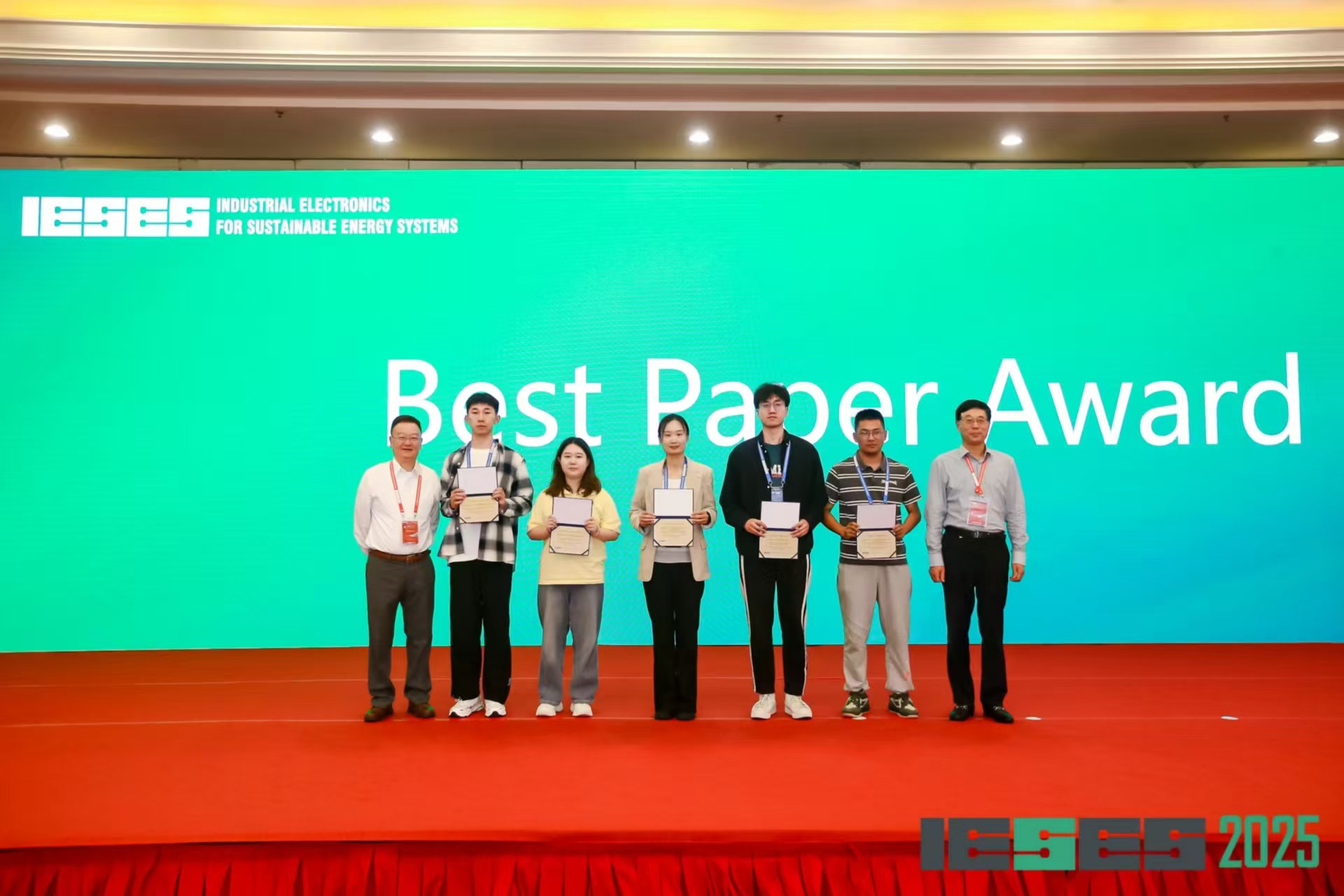
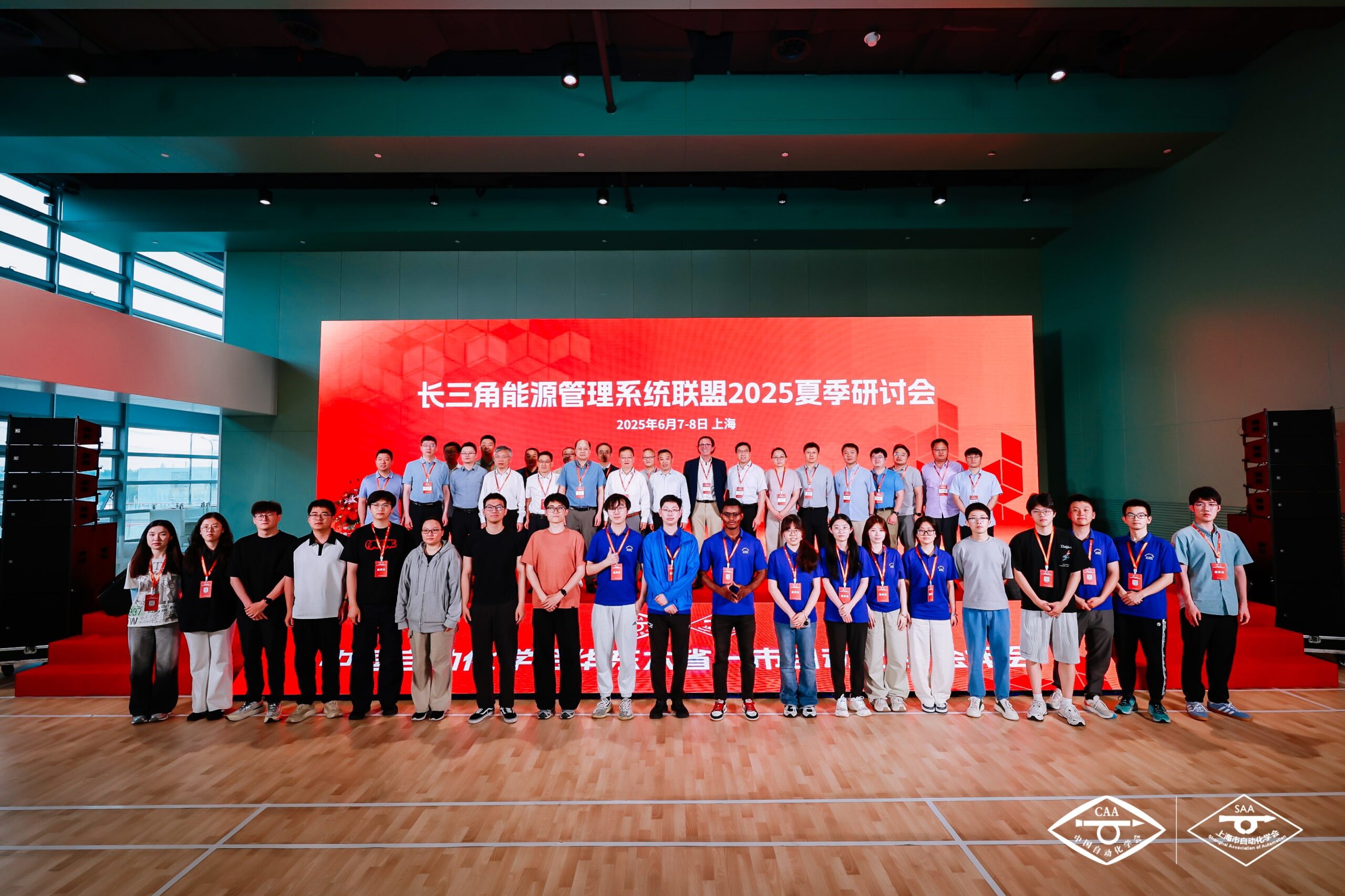
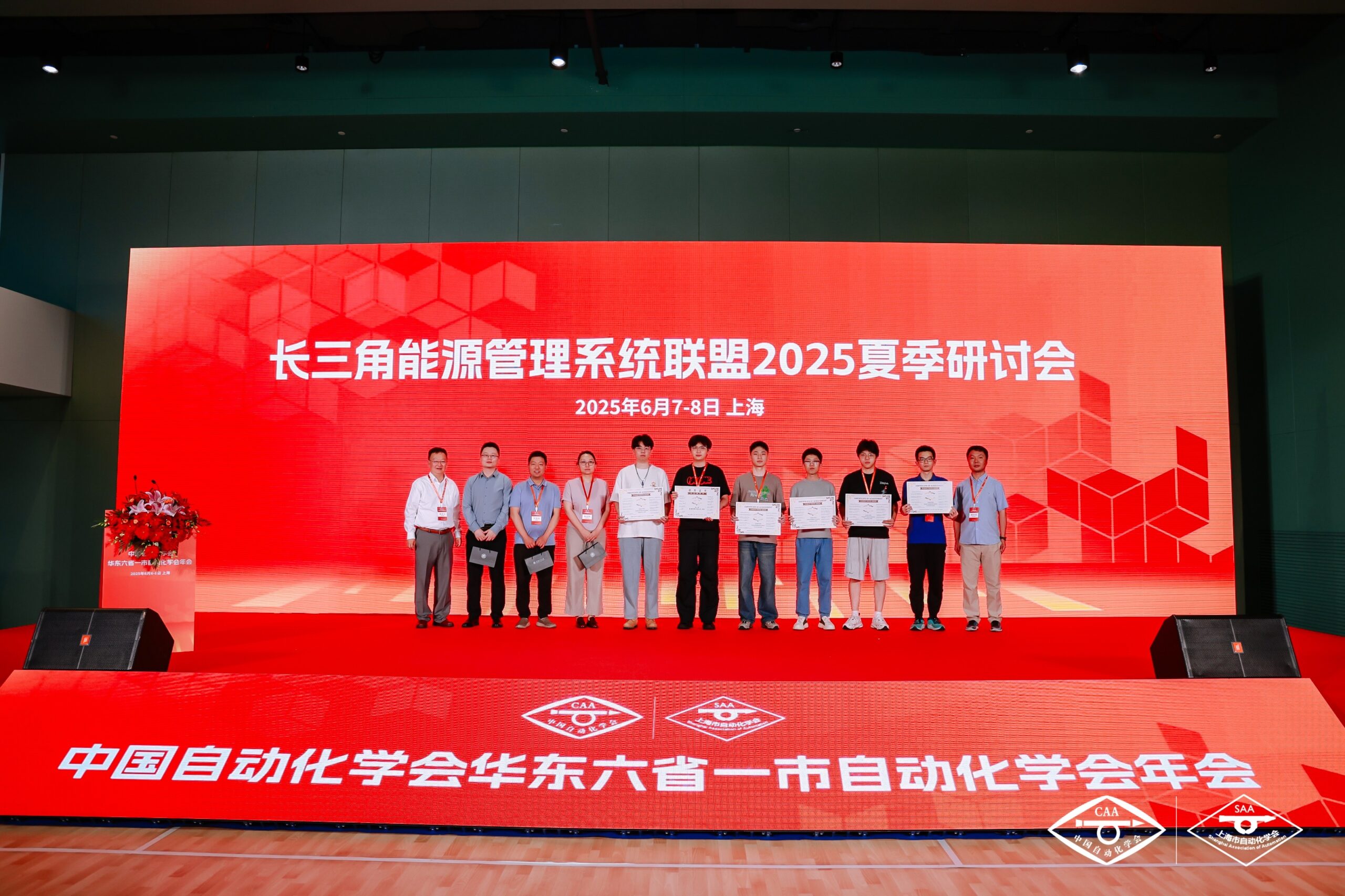
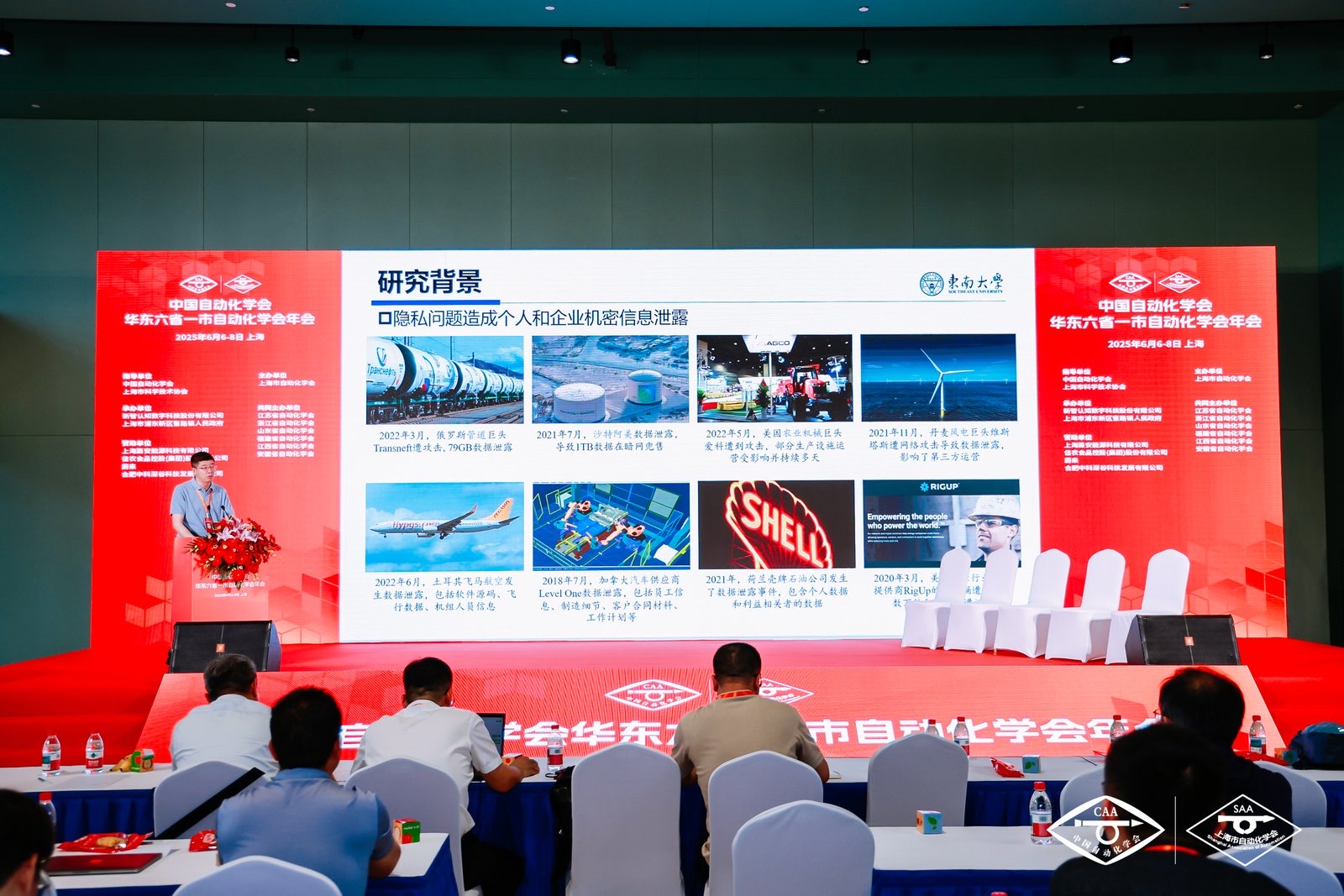
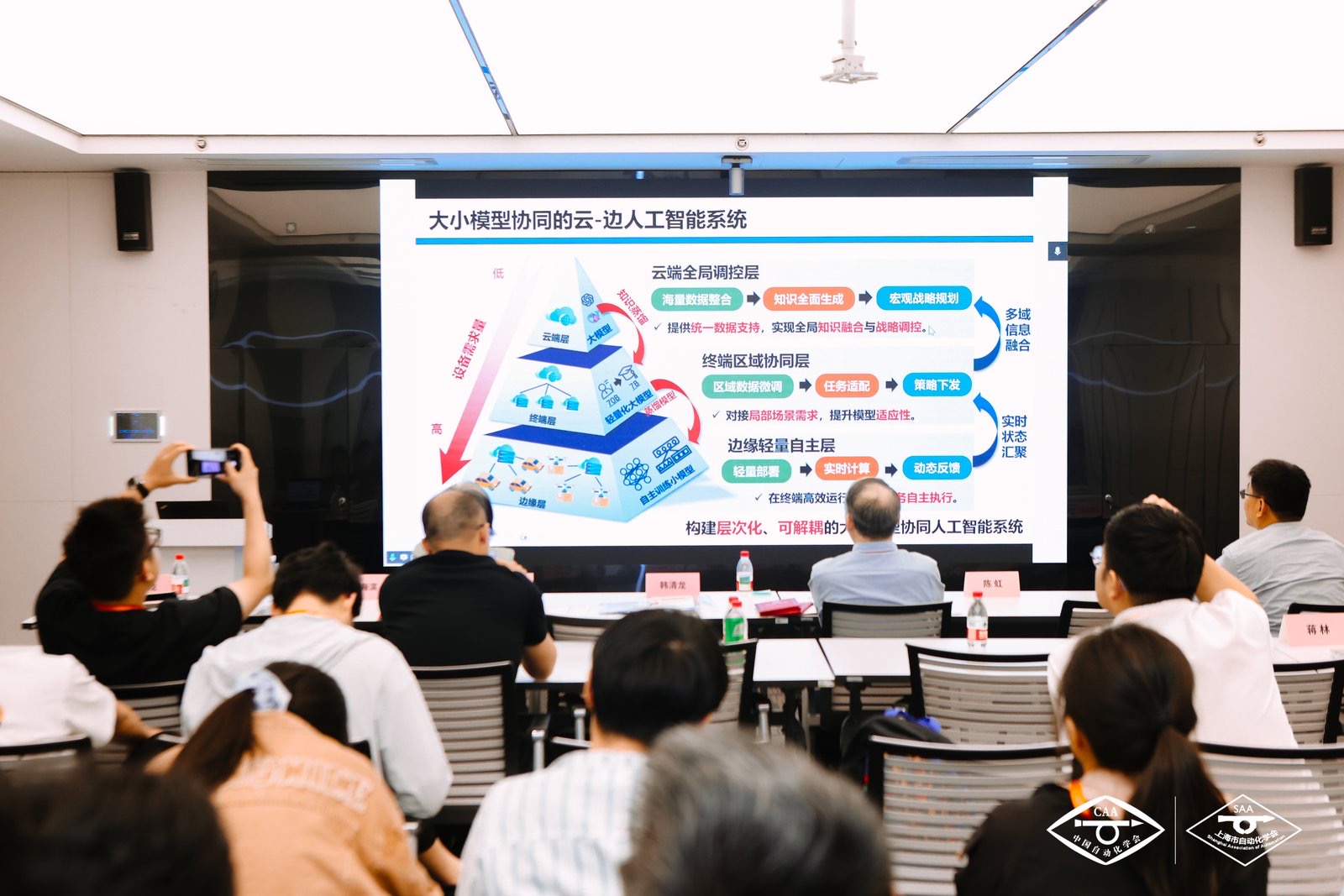
The YD-EMSC 2025 Summer Seminar of the Yangtze River Delta Energy Management System Alliance, the fourth edition of this annual event, was successfully held on June 7-8, 2025. Organized by Professor Mo-Yuen Chow of Shanghai Jiao Tong University, the seminar focused on the latest advancements in energy management systems, bringing together leading experts and scholars to engage in meaningful discussions on industry developments.
The Yangtze Delta Energy Management Systems Consortium (YD-EMSC) is a collaborative effort comprising five distinguished universities in the Yangtze Delta region: Nanjing University of Posts and Telecommunications (NJUPT), South East University (SEU), Shanghai Jiao Tong University (SJTU), Zhejiang University (ZJU), and Zhejiang University of Technology (ZJUT).
Key highlights of the seminar included:
Industrial Perspective on EMS: Experts from Nanjing University of Posts and Telecommunications, Guodian Nanzi Automation, NR Electric, and CATL shared practical insights and innovations in energy management.
Academic Perspectives on EMS: Leading scholars, including Professor Cao Xianghui from Southeast University and Professor Guo Fanghong from Zhejiang University of Technology, presented cutting-edge research and explored future trends in energy management systems.
Alliance Strategy Discussion: The YD-EMSC Alliance outlined strategic goals for future research collaborations, industry influence, and member growth, shaping the long-term development of EMS in the region.
Talent Development: A dedicated session on the career paths and development opportunities for young professionals in EMS featured global academic leaders offering valuable guidance and insights.
The workshop fostered cross-industry collaboration, academic research, and talent development, reinforcing the commitment to advancing energy management system innovation in the Yangtze River Delta region.
A Vision for a Resilient Energy Future:
YD-EMSC’s mission is to pioneer distributed and collaborative technologies for reconfigurable, reliable, scalable, and resilient energy management systems of evolving networked microgrids, particularly in contexts of disaster relief and emergent dynamic adhoc power systems.
With a total of twenty-eight dedicated faculty members, YD-EMSC is set to make significant strides in the field of energy management systems.
Campus directors:
NJUPT: Yue Dong (岳东) Professor, Dean of Automation/AI college, IEEE Fellow
SEU: Cao Xianghui ( 曹 向 辉 )Professor in Automation department
SJTU: Chow Mo-Yuen (周武元) Professor in JI, Director of ASPS research center in GIFT, IEEE Fellow
ZJU Power Electronics: Ma Hao (⻢皓)Professor in Electrical Engineering department
ZJU Systems and Control: Chen Jiming (陈积明) Professor, Vice-chancellor of ZJUT, IEEE Fellow
ZJUT: Guo Fanghong (郭方洪)Associate Professor, Director of Automation Department
Campus coordinators:
NJUPT: Zhang Huaipin ( 张 怀 品 ) Associate research professor, Institute of Advanced Technology
SEU: Yang Chaoqun (杨超群) Associate research professor, Department of Automation
SJTU: Li Yiyan (李亦言)Assistant professor, College of Smart Energy
ZJU: Deng Ruilong (邓瑞⻰)Research Professor, Dean Assistant of Control Science & Engineering Department
ZJUT: Guo Fanghong (郭方洪)Associate Professor, Director of Automation Department
The electric power system is vital to national infrastructure, yet vulnerable to natural disasters. Traditional centralized control strategies are prone to single points of failure and high computational costs. In contrast, distributed energy management systems (EMS) offer improved resilience by reducing failure risks and easing communication bottlenecks—crucial for emergency response.
During disasters, when grid infrastructure is damaged or destroyed, distributed EMS-enabled microgrids can restore power to critical facilities like hospitals and emergency centers. However, these systems face challenges in scalability, convergence speed, and real-time reconfigurability—especially in large-scale, time-sensitive scenarios.
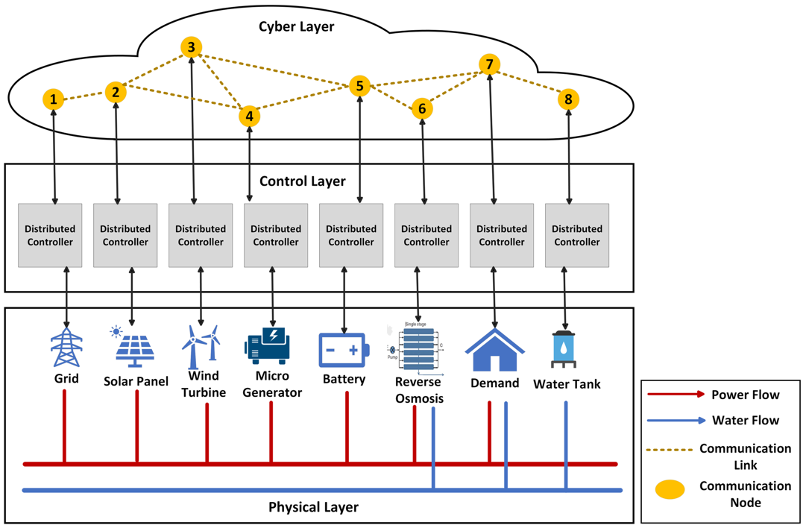
To overcome the state of the art challenges, our research lab (ADAC) has proposed a novel Dynamic Energy Management System (D-EMS) framework for microgrids to perform self-reorganization for the Hierarchical Collaborative Distributed Energy Management Systems (H-CoDEMS) automatically and in a hierarchical structure to achieve log-scale scalability, fast convergence and reconfigurability. Leveraging situational awareness and intelligent management, the system adopts a hierarchical distributed consensus framework to enable fast and collaborative decision-making. This ensures efficient power system scheduling operations, allowing for rapid power restoration and ultimately saving lives.
Publications:
[1]. S. Capezza, A. Joshi and M. -Y. Chow, “Hierarchical Distributed Consensus Based Economic Dispatch of Distributed Energy Resources (DERs) for Networked Microgrids,” 2023 IEEE 3rd International Conference on Industrial Electronics for Sustainable Energy Systems (IESES), Shanghai, China, 2023, pp. 1-6, doi: 10.1109/IESES53571.2023.10253706.
[2]. S. Capezza, A. Joshi and M. -Y Chow, “Weighted Hierarchical Consensus based Economic Dispatch Utilizing Cluster Size Estimation for Networked Microgrids,” IECON 2023- 49th Annual Conference of the IEEE Industrial Electronics Society, Singapore, Singapore, 2023, pp. 01-06, doi: 10.1109/IECON51785.2023.10312209.
[3]. A. Joshi and M. -Y. Chow, “Hierarchical Distributed Consensus Based Networked Microgrid Energy Management For Disaster Relief,” 2024 IEEE 19th Conference on Industrial Electronics and Applications (ICIEA), Kristiansand, Norway, 2024, pp. 1-6, doi: 10.1109/ICIEA61579.2024.10665212.
[4]. A. Joshi, S. Capezza and M. -Y. Chow, “Strategic Leader Selection and Cluster Formation in Hierarchical Networked Microgrids,” 2024 IEEE Power & Energy Society General Meeting (PESGM), Seattle, WA, USA, 2024, pp. 1-5, doi: 10.1109/PESGM51994.2024.10688456.
To address the challenges posed by faults in Battery Energy Storage Systems (BESS), the ADAC Lab has developed advanced monitoring and fault detection solutions.
We have developed a comprehensive Battery Incipient Fault Detection and Diagnosis (BIF-DD) Platform, which utilizes real-time monitoring and advanced algorithms for early fault detection and root-cause diagnosis. This platform, implemented on a Raspberry Pi, performs parameter identification to visualize battery fault statuses based on data from a Battery Fault Simulator.
The platform is continuously evolving with the following enhancements:
Expansion to Multiple Fault Types: The system is being expanded to detect a broader range of faults, enhancing the comprehensiveness of the BIF-DD platform.
Integration with AI and Big Data: We are integrating advanced AI technologies and large-scale models to further improve fault prediction accuracy and system intelligence.
Connection with Power Systems and Microgrids (MGs): The platform will be linked with power systems and microgrids, enabling real-time communication of BESS status for optimized energy dispatch and grid management.
Through these advancements, the BIF-DD platform is poised to provide a robust solution for proactive BESS maintenance, ensuring safe, reliable, and efficient energy storage operations.
Publications:
[1] Ziqi Wang and Mo-Yuen Chow, “Battery Modeling of SEI and Metal Dendrite Growth: A Transmission Line Circuit Framework with Genetic Algorithm-Identified Parameters ,” 2025 IEEE 20th Conference on Industrial Electronics and Applications (ICIEA).(accepted)
[2] Skieler Capezza and Mo-Yuen Chow, “Real-Time SOH Estimation via Online Identification of Temperature and SOC Dependent Electric Circuit Model Parameters,” in IECON 2025- 51st Annual Conference of the IEEE Industrial Electronics Society, 2025.(accepted)
[3] Junya Shao, Mo-Yuen Chow, Zhiping Tan and Huiqin Jin, “Solid Electrolyte Interface Growth Fault Modeling for Battery State of Health Simulation,” 2025 IEEE International Conference on Industrial Technology (ICIT), Wuhan, China, 2025, pp. 1-6, doi: 10.1109/ICIT63637.2025.10965289.
[4] Ziqi Wang, Mo-Yuen Chow, Zhiping Tan and Huiqin Jin, “Modelling of the Solid Electrolyte Interface Growth Using Physics-Based Equivalent Circuit Model,” 2025 IEEE International Conference on Industrial Technology (ICIT), Wuhan, China, 2025, pp. 1-6, doi: 10.1109/ICIT63637.2025.10965250.
The 3rd IEEE International Conference on Industrial Electronics for Sustainable Energy Systems (IESES)
The 3rd IEEE International Conference on Industrial Electronics for Sustainable Energy Systems (IESES) was held in Shanghai City, China from July 26-28, 2023.
The goal of IESES 2023 is to provide an open and inspiring multidisciplinary platform to exchange innovative ideas, solutions, and results in sustainable energy systems. Shanghai has many leading research institutes and companies in the field of energy storage and sustainable energy. Taking this advantage, in addition to regular academic events, IESES 2023 has organized industrial events with keynote speeches, panels, company tours, and also hold a banquet on Shanghai Huangpu River night cruise.
Professor Saifur Rahman, 2023 IEEE President & CEO, was invited to make keynote speech on IoT Sensor Integration in Smart Buildings for Climate Sustainability.
Professor Jun Ni, Dean of Global Institute of Future Technology (GIFT), SJTU, China, was invited to make keynote speech on GIFT’s Sustainable Energy Program and University-Industry Collaboration with CATL .
The inaugural workshop of the Yangtze Delta Energy Management Systems Consortium (YD-EMSC), held on August 9-10, 2023, marked a significant milestone in the pursuit of cutting-edge technologies in Energy Management Systems (EMS) for Microgrids and Virtual Power Plants. It was sponsored by UM-SJTU JI and the Shanghai Association of Automation (SAA).
The Yangtze Delta Energy Management Systems Consortium (YD-EMSC) is a collaborative effort comprising five distinguished universities in the Yangtze Delta region: Nanjing University of Posts and Telecommunications (NJUPT), South East University (SEU), Shanghai Jiao Tong University (SJTU), Zhejiang University (ZJU), and Zhejiang University of Technology (ZJUT).
Initiated by Professor Mo-Yuen Chow, an esteemed IEEE Fellow and faculty member at the University of Michigan-Shanghai Jiao Tong University Joint Institute (UM-SJTU JI), in April 2023, YD-EMSC brings together a network of experts dedicated to the advancement of energy management technologies.
At the inaugural workshop, the YD-EMSC highlighted key immediate research projects comprising, developing a Hardware-in-the-Loop (HiL) testbed for consortium theme demonstration and validations, creating a cyber-management-physical simulator and digital twin for the system and developing Smart Collaborative Distributed Energy Management Systems (S-CoDEMS) for disaster relief.
A Vision for a Resilient Energy Future:
YD-EMSC’s mission is to pioneer distributed and collaborative technologies for reconfigurable, reliable, scalable, and resilient energy management systems of evolving networked microgrids, particularly in contexts of disaster relief and emergent dynamic adhoc power systems.
With a total of twenty-eight dedicated faculty members, YD-EMSC is set to make significant strides in the field of energy management systems.
Looking ahead, the next YD-EMSC workshop is scheduled to take place in Nanjing, China, in the spring of 2024
Campus directors:
NJUPT: Yue Dong (岳东) Professor, Dean of Automation/AI college, IEEE Fellow
SEU: Cao Xianghui ( 曹 向 辉 )Professor in Automation department
SJTU: Chow Mo-Yuen (周武元) Professor in JI, Director of ASPS research center in GIFT, IEEE Fellow
ZJU Power Electronics: Ma Hao (⻢皓)Professor in Electrical Engineering department
ZJU Systems and Control: Chen Jiming (陈积明) Professor, Vice-chancellor of ZJUT, IEEE Fellow
ZJUT: Guo Fanghong (郭方洪)Associate Professor, Director of Automation Department
Campus coordinators:
NJUPT: Zhang Huaipin ( 张 怀 品 ) Associate research professor, Institute of Advanced Technology
SEU: Yang Chaoqun (杨超群) Associate research professor, Department of Automation
SJTU: Li Yiyan (李亦言)Assistant professor, College of Smart Energy
ZJU: Deng Ruilong (邓瑞⻰)Research Professor, Dean Assistant of Control Science & Engineering Department
ZJUT: Guo Fanghong (郭方洪)Associate Professor, Director of Automation Department
Intelligent Space (iSpace) is a relatively new concept to effectively use distributed sensors, actuators, robots, computing processors, and information technology over communication networks. iSpace is a large scale Mechatronics System by integrating sensors, actuators, and control algorithms in a communication system using knowledge from various engineering disciplines such as automation, control, hardware and software design, image processing, communication and networking.
Kelola interaksi pelanggan secara efisien lewat sistem CRM MTP di KAYARAYA, yang dirancang untuk menyatukan data dan strategi dalam satu dasbor cerdas.